Meat Sheep and the Fate of Being Eaten
Three Bags FullMeat Sheep and the Fate of Being Eaten names the brutal reversal at the heart of apparently ordinary shepherding: grass that looks like nourishment can be part of a process preparing sheep for slaughter. The idea enters the story through a ram who understands what his own flock cannot, and through Zora, who must learn to recognize the danger in Gabriel’s care. It turns the pasture from a pastoral refuge into a place where feeding, confinement, and death belong to the same system.
The Pasture and the Scythe
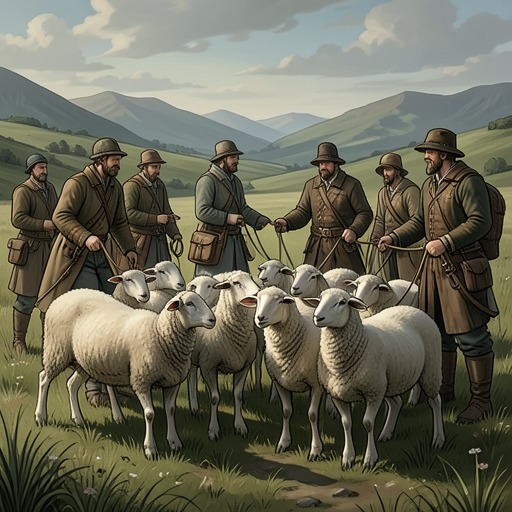
Gabriel’s treatment of his sheep first appears to be attentive husbandry. While repairing the fence, he observes that they eat a great deal but are good doers, and that they must be fattened. He then takes George Glenn’s scythe from the toolshed and cuts grass at the foot of the hill, on the side facing away from the sea. The tool is familiar to the sheep, but its purpose is not: George had said that people who kept sheep could spare themselves a scythe. Watching Gabriel use it, they see him graze without wanting the grass. The cut blades lie flat, and the work appears to them as senseless destruction. The scene makes visible a crucial distinction: grass is food for sheep, but here the act of cutting it is also part of human preparation for a different appetite.
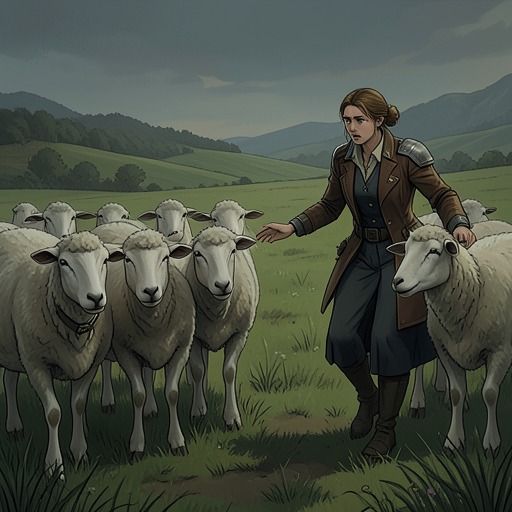
Zora approaches an older ram among Gabriel’s animals after noticing both his apparent intelligence and the abyss she senses in him. His gentle, elegant voice jars with his sturdy body as he calls his flock fodder and says that Gabriel is death. When Zora answers that grass is fodder, the ram insists that the sheep themselves are meat and that meat is fodder. His language reverses the flock’s familiar order: nourishment does not lead to safety but to being made edible. When he says that grass brings death, Zora begins to understand that Gabriel’s abundant feeding is not simply care.
Meat Breed and the Knowledge of Danger
The ram gives Zora the concrete pattern behind his warning: the sheep eat, grow fat, and die. He stops before completing what will happen to him, but Zora recognizes the implication. Gabriel’s flock is a meat breed, selected for growing fat quickly; Mopple the Whale is also from a meat breed, a fact George Glenn had once connected with being under the knife. The new idea makes the ram’s words legible to Zora, but not immediately to the flock. She tells the others that Gabriel will kill his sheep for their meat and explains that rapid fattening is the purpose of their feeding. Heather dismisses the ram as crazy and insists that Gabriel is a shepherd; the others hesitate to believe Zora because she is piecing the conclusion together rather than repeating a plain explanation.
Miss Maple’s observation about the sheep’s thin fleeces gives Zora’s inference additional support. The flock had been surprised that Gabriel’s sheep were so unwoolly; if their fleeces are not what Gabriel wants from them, their bodies and rapid growth explain the difference. The details of fleece, appetite, and weight thus become evidence about intended use. Care is not disproved by the presence of grass or a shepherd, but neither does the familiar appearance of shepherding guarantee that the animals are being kept for their own sake.
The ram describes the forces that keep his flock from acting on what he knows: fear, fences, and fast dogs. The sheep are young and do not understand; the mother ewes forget each year, and want to forget. The danger is maintained not by a single barrier alone but by a cycle of confinement, fear, and renewed ignorance. Zora sees the ram as brave because he looks into this abyss alone, while his flock continues feeding on the cut grass. His knowledge offers no easy escape, and the warning cannot by itself make the others understand.
Fear, Fences, and the Flock
The discovery changes how Zora’s own flock understands fear. When Melmoth teaches them to drive fear away, he locates it outside them, where Gabriel, the butcher, and the world’s meat eaters are. Fear is not simply an inward weakness to be corrected: it has an external source in the people and practices that threaten the sheep. Melmoth makes attention part of the exercise, redirecting the flock from helplessness toward recognizing what is around them. The language of fences extends beyond a physical enclosure to the fear that keeps animals from responding to danger.
The contrast also revises the apparent meaning of the pasture. George Glenn’s animals graze in a green landscape, but its abundance cannot be treated as proof that every sheep is safe. Under Gabriel, the scythe makes grass plentiful by cutting it down, while the sheep’s good appetite and capacity to grow fat make them valuable for a purpose they cannot consent to. The pastoral image of a shepherd feeding a flock is therefore exposed as ambiguous: food can sustain an animal, or it can prepare that animal for slaughter. The ram’s fear is not a fanciful rejection of shepherding but knowledge of what this particular husbandry is for.
Protection and the Will
George Glenn’s will supplies a sharply different framework for the flock’s future. It leaves the rest of his fortune to his sheep so they can go to Europe as promised, with an authorized representative to accompany them as shepherd. The representative’s duties include having stories read aloud to the sheep for at least half an hour each day. The will also states that none may be sold or slaughtered and that breeding should prioritize a dense fleece. These conditions directly oppose Gabriel’s meat-oriented care: the sheep are not to be valued for how quickly they can be fattened, but protected from sale and slaughter.
The protection remains mediated by human authority. The lawyer is to administer the money, check that the conditions are met, and use his judgment to appoint the representative. Yet the flock is not merely an object of that procedure. When the lawyer asks whether anyone else will take the position, Rebecca volunteers, and the sheep’s relief reflects their refusal to trust Gabriel with their journey. As Gabriel murmurs in Gaelic, Othello steps away from him and the flock gathers around Rebecca. Their movement gives visible force to a choice the legal arrangements alone do not make: the animals identify the person they will follow. The will offers a formal safeguard against the fate of being eaten, while the flock’s response shows that protection also depends on attending to the sheep’s own preference.